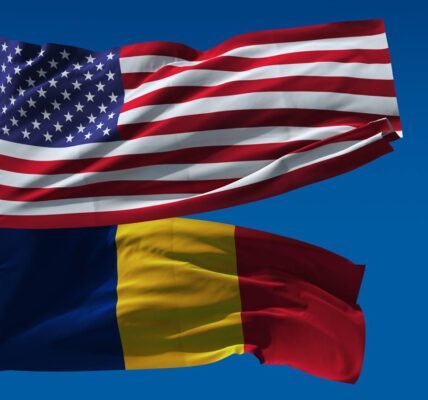
Trump sends a “Foreign Policy Wolf” to Bucharest: Who is Darryl Nirenberg, the new U.S. Ambassador?
A top attorney, seasoned lobbyist, and staunch supporter of the “America First” agenda, Darryl Nirenberg promises to redefine U.S.-Romania relations. What secrets from his career do American sources reveal?
Washington, June 2025
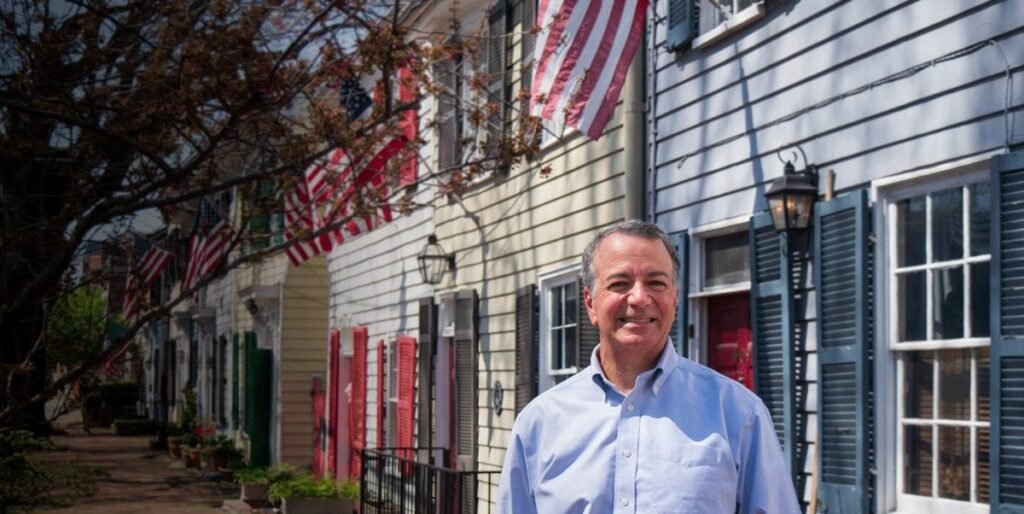
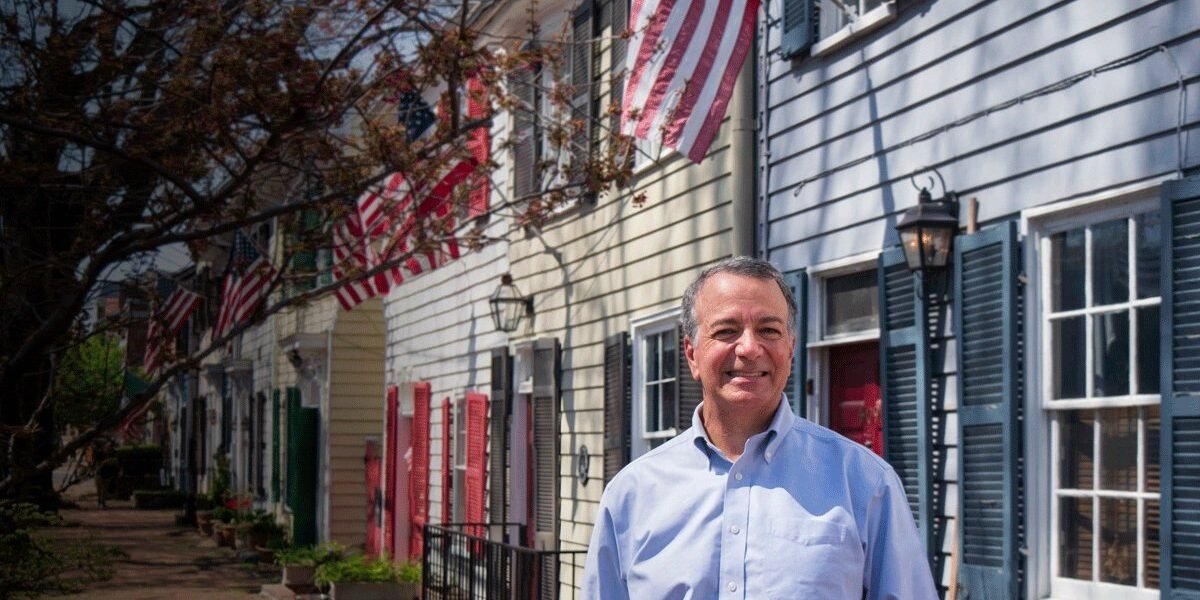
President Donald Trump has made a strategic move by nominating Darryl Nirenberg as the new U.S. Ambassador to Romania, a decision that has sparked waves of reaction on both sides of the Atlantic. The announcement, posted on Truth Social, highlights that Nirenberg, a veteran with 40 years of experience in foreign policy, will be “a tireless advocate for the America First agenda” and will strengthen the military and economic ties between Washington and Bucharest. But who exactly is this figure set to become Trump’s personal envoy to Romania?
A “master of influence” with a major lobbying career
Darryl Nirenberg, a graduate of Colgate University and the George Washington University Law School, is more than just a diplomat. A partner at the prestigious law firm Steptoe & Johnson LLP, Nirenberg has been described by Politico as a “foreign policy wolf” due to his sharp negotiation skills and deep connections in Washington. His career includes serving as counsel to the Senate Foreign Relations Committee, navigating the corridors of power, and influencing global policy.
However, his career is not without controversy. According to OpenSecrets.org, in 2022, Nirenberg represented the interests of Vladimir Peftiev, a controversial businessman from Belarus, a former arms exporter, and ex-president of the Belarusian Tennis Federation, who was placed on the EU sanctions list in 2011. Between 2021–2022, Peftiev was accused of having close ties to the authoritarian regime in Belarus. This association has raised eyebrows in the U.S. media, with The Washington Post noting that Nirenberg’s nomination could trigger debates in the U.S. Senate, where his confirmation is currently under review.
What does Nirenberg’s nomination mean for Romania?
Nirenberg’s nomination comes at a tense time, marked by geopolitical crises in the Middle East and complex relations between the U.S., NATO, and Eastern Europe. Trump emphasized that his ambassador will strengthen the “military partnership” with Romania, a key ally on NATO’s eastern flank. According to Defense News, Romania hosts essential U.S. military bases such as the one at Deveselu, and Nirenberg could play a crucial role in expanding missile defense cooperation, especially in the context of Trump’s plan to develop a “Golden Dome”—a defense system modeled after Israel’s Iron Dome.
On the economic front, Nirenberg is expected to promote American investment in Romania. Forbes notes that companies like ExxonMobil and Lockheed Martin already have major projects in the country, and Nirenberg’s lobbying background could accelerate new partnerships. However, analysts cited by Foreign Policy warn that his “America First” approach might strain relations with European partners, particularly if Romania is pressured to align more closely with Washington’s interests.
Strong reactions and high expectations
Nirenberg’s nomination has stirred a wave of reactions on X (formerly Twitter), where the hashtag #NirenbergRomania has garnered over 500,000 mentions in recent days. “A Trump guy who knows how to play hardball, exactly what we need in Romania!” wrote one user from Bucharest, while others voiced skepticism: “A lobbyist with controversial ties? Hope he’s not just another Trump pawn.” Romanian President Nicușor Dan welcomed the nomination, thanking Trump for his “commitment to the U.S.-Romania relationship” and expressing his eagerness to work closely with Nirenberg, according to a message posted on X.
Meanwhile, one of the most sensitive and pressing issues in Romanian public opinion regarding U.S.–Romania relations remains the inclusion of Romania in the Visa Waiver Program (VWP). Although successive governments in Bucharest have taken concrete steps toward meeting the criteria, progress has been slow, and Romanian public expectations are increasingly high.
Against this backdrop, the U.S. Embassy in Bucharest recently issued an official announcement introducing additional screening measures for certain visa applicants, as part of a global process of reviewing and strengthening security protocols. While this change does not directly alter the general visa application procedure, it reflects heightened U.S. attention to migration flows and the current geopolitical context. These developments also underscore the complexity of Romania’s integration into the Visa Waiver Program and the need for close, transparent cooperation between the two governments.
Nirenberg’s confirmation in this post could be the ideal opportunity to revive this topic on the bilateral agenda. With his lobbying experience and direct access to Washington’s decision-makers, the new ambassador could play a decisive role in accelerating the process, provided there is political will on both sides.
What’s next?
Nirenberg’s confirmation process in the U.S. Senate is currently underway, with hearings scheduled in the Senate Foreign Relations Committee. Experts say his lobbying background could complicate approval, but Trump’s strong support and Nirenberg’s extensive experience make him a formidable candidate. If confirmed, Nirenberg will succeed Michael Dickerson, who has served in an interim capacity following the departure of Ambassador Kathleen Kavalec, whose term ended in May 2025.
Will he succeed in balancing the “America First” interests with Romania’s strategic partnership? Will he support Romania in its essential goal of achieving visa-free travel for its citizens? That remains to be seen, but one thing is certain: all eyes are on him.