
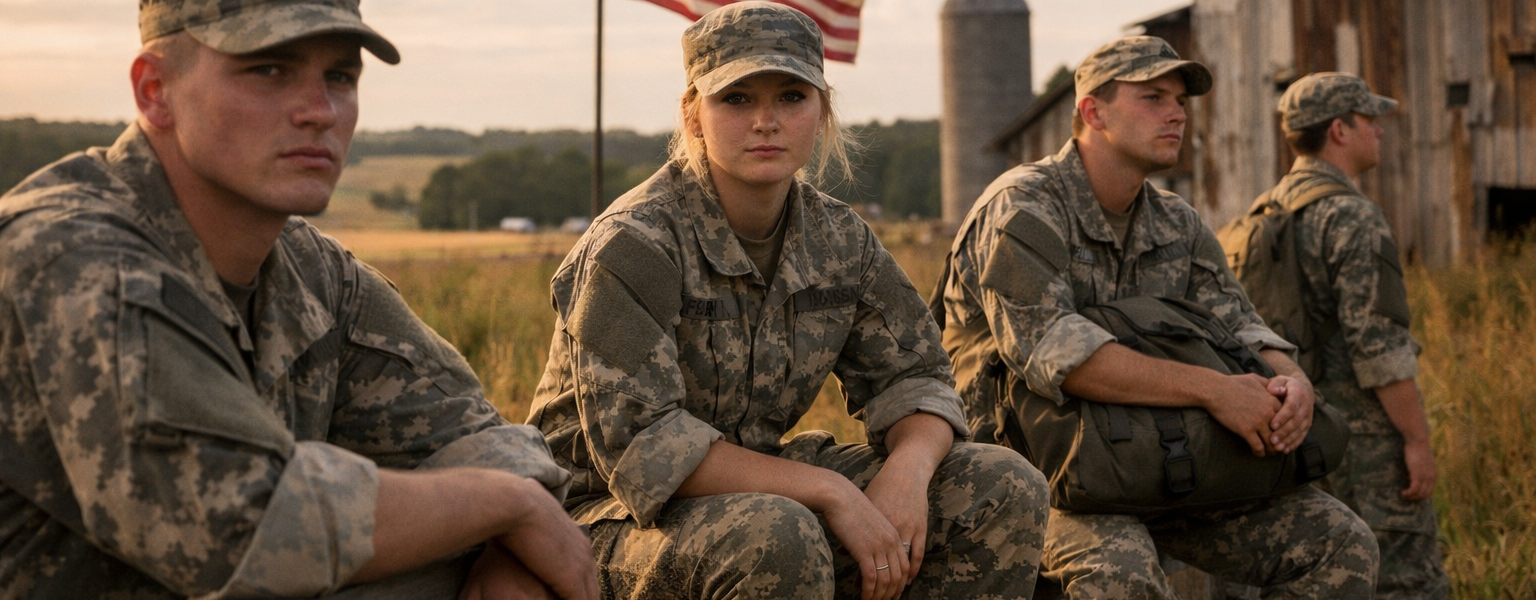
“Ask not what your country can do for you, ask what you can do for your country.”
D. M.
There comes a moment in every young person’s life when thinking about the future stops being speculative and becomes a concrete choice, brutal, even. Not everyone has the same opportunities; some don’t speak about abstract dreams, but about survival, about the chance to break out of a circle that already feels closed. In the United States, for hundreds of thousands of young people from financially struggling families, the military is not a romantic calling but a lucid decision to change their destiny.
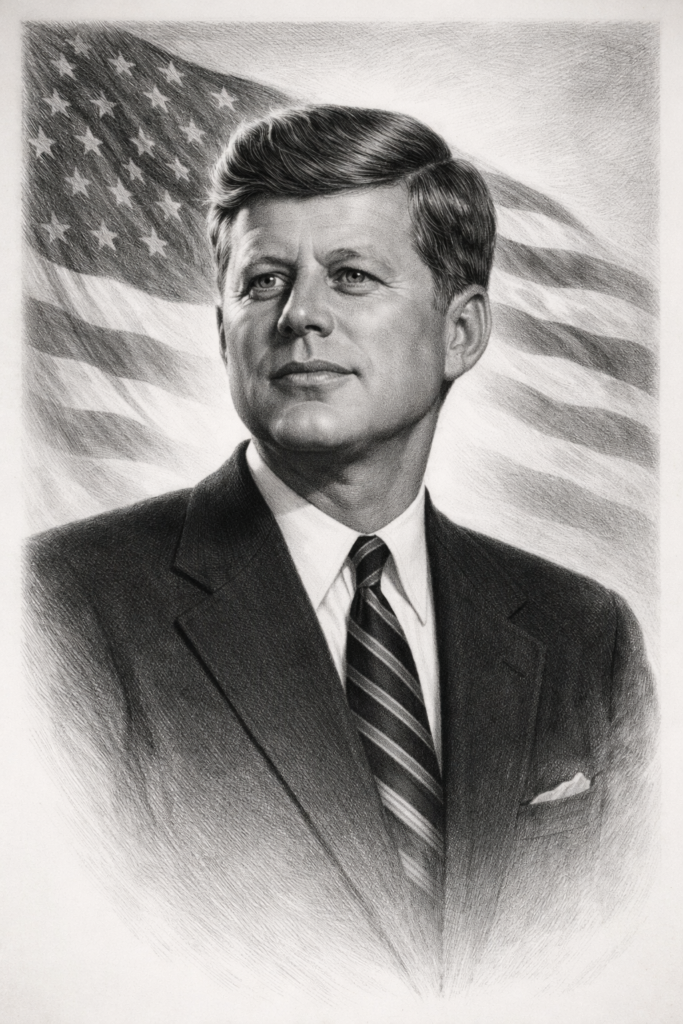
John F. Kennedy’s words are not a patriotic metaphor or a textbook slogan. They are a line of demarcation. On one side stands the adolescent, the consumer of rights, the individual who waits. On the other stands the adult, the citizen, the person who understands the connection between value and responsibility. When John F. Kennedy spoke those words in 1961, he was not talking about parade patriotism or blind sacrifice. He was talking about maturation, about the moment when an individual stops being merely a beneficiary of society and becomes an active part of it. A person who understands that nothing that truly matters can be obtained without commitment, without risk, without personal effort. For such a person, value is not a claim but a result. Responsibility is not a constraint but a form of dignity. It is the difference between the one who waits and the one who builds.
In America, this idea did not remain a beautiful line in a historic speech. It became a real mechanism for transforming young people. A harsh, imperfect, yet deeply effective mechanism: first you assume responsibility, then you are given opportunity.
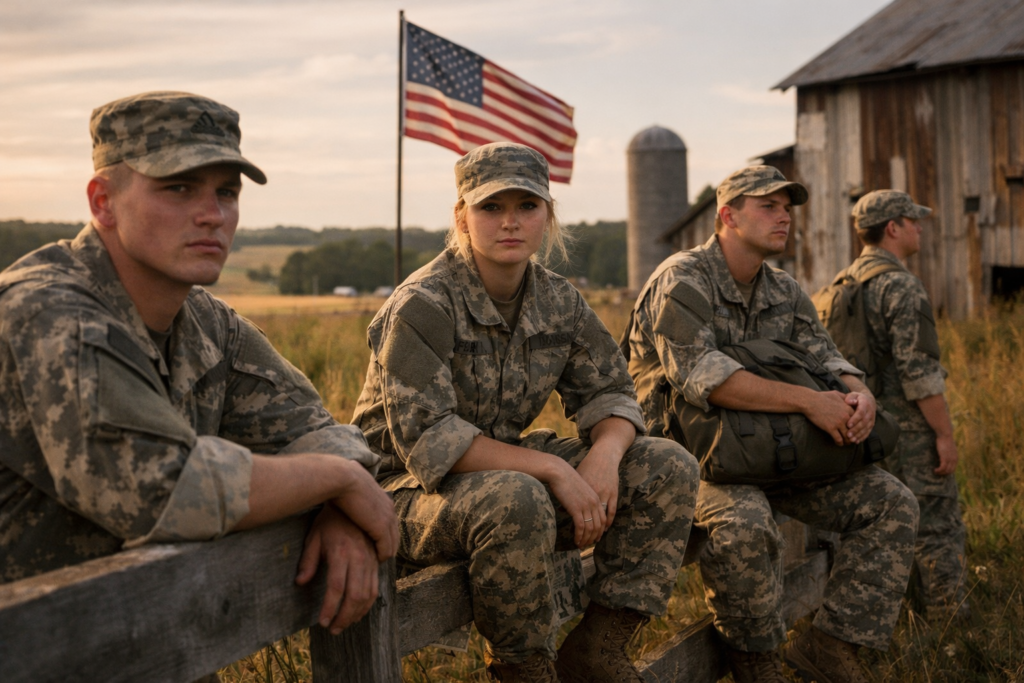
America was among the few countries that had the courage to turn this idea into a functional system, not a moral sermon, but a clear and efficient social contract: first you give something real to your country, then your country returns the service, not symbolically, but concretely, through education, stability, and opportunity.
For hundreds of thousands of young Americans raised in poverty, the military is not a romantic ideal nor a game of heroism. It is an existential decision. They discover they do not have money for colleges that cost $30,000-$40,000 a year. They are aware that elite universities can easily reach $150,000 or even $300,000 for a full degree. They realize student loans can mean decades of debt and a life lived under financial pressure. And they know something else essential: they will not earn those sums through unskilled labor. Perhaps through luck, but no reasonable person can build a life on luck alone.
They know very clearly what they do NOT want: to relive their parents’ lives of poverty and deprivation. They know they cannot afford college. They know they cannot afford years of existential drifting. And they know one more essential truth: no one is coming to save them, and if they do nothing radical, their lives will never change.
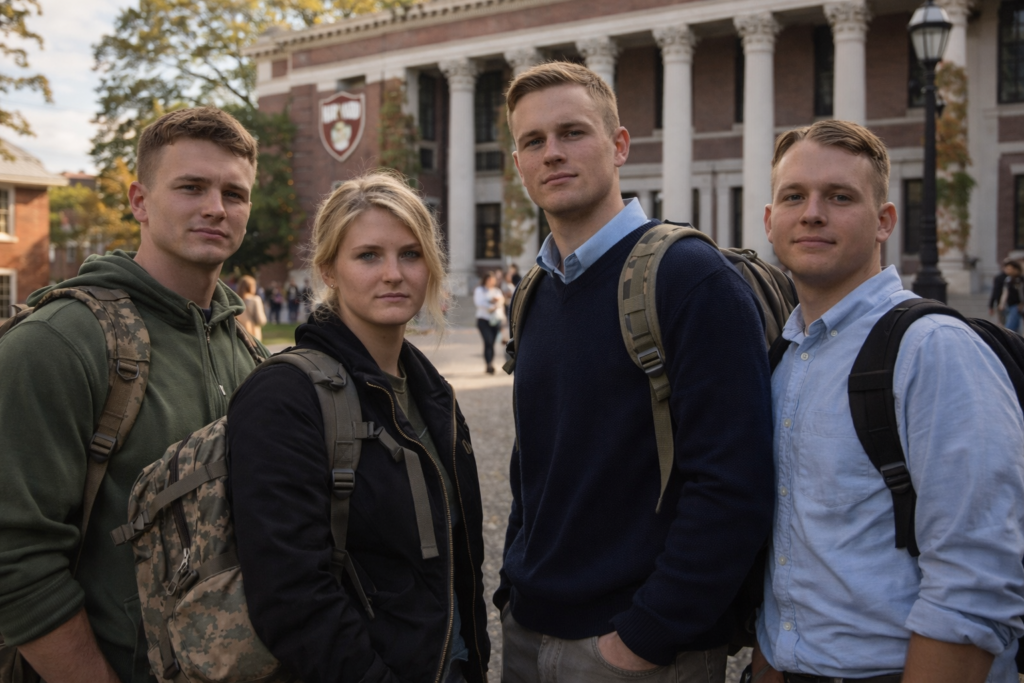
This article is not a theory. It is the result of conversations with people who joined the military as a way out of poverty, people who spoke without pathos about their determination not to remain “back where they came from,” about the fear of living the same life as their parents, about the painful awareness that if they did not do something radical, nothing would change. They did not talk about glory. They talked about escape, about personal fulfillment in places with more options than the ones they were born into. Everything came down to a clear will: “I didn’t want to stay there. I didn’t want that life.”
Many of them came from places America does not show in movies: forgotten rural communities, poor neighborhoods, families where no one had ever finished college. So they chose the hard road. They chose discipline. They chose risk. They chose to give something before asking for anything.
That is how the military emerges as a future path, not as refuge, but as an act of will. The young person says consciously: “I am willing to give years of my life, to accept discipline, risks, harsh rules. In return, I want the chance to become someone else.” And the American state answers, clearly and plainly: “If you honor your part, we will honor ours.”
Through the law known as the GI Bill, these young people receive not just degrees, but a reset of destiny. Education is fully paid. Books are covered. There is a monthly housing allowance. After military service, for the first time, they are no longer in survival mode. They can study. They can think long-term. They can build the future they could only dream about as teenagers.
But perhaps the most important thing is not what they receive, it is what they become. The military forces them to mature. It teaches them that decisions have consequences. That daily effort matters. That not everything is about you. That there is something larger than personal comfort. As U.S. Navy Admiral William H. McRaven said, making your bed every morning is essential: “If you want to change the world, start by making your bed.”
This elementary lesson in discipline is part of a broader process that produces people who are hard to impress with the noise of the world, hard to manipulate, and hard to intimidate, people who know what it means to lose and keep going. Exactly the kind of people from whom real leaders are born. These young men and women leave the military not only with benefits, but transformed, matured, adapted. They leave with a deep understanding of reality, of limits, of responsibility toward others. They know what it means to have nothing, and what it means to build something from scratch. They are precisely the type of people from whom true leaders emerge, not necessarily the most vocal, but the most solid.
The contrast with much of the Western world is painful. In Europe and other prosperous societies, many young people grow up without ever being tested by anything real. Education is free or cheap, but without stakes. Rights are abundant; responsibilities diffuse. The result is a generation of adults who, at 40 or 50, still speak of themselves as “works in progress.”
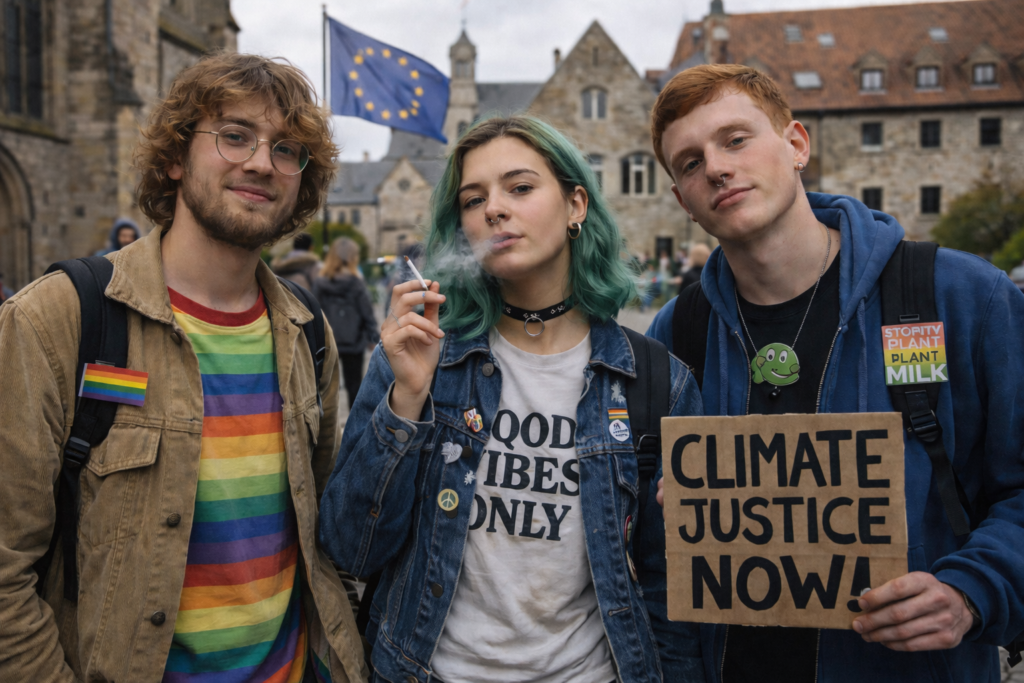
We see biologically mature but existentially immature adults who spend intellectual energy on trivial subjects, symbolic micro-dramas, sterile debates, people never forced to choose between safety and risk, between comfort and sacrifice. While a young man from a poor neighborhood in Rio de Janeiro knows a single bad decision can throw him permanently into chaos, or cost him his life, a privileged adult in a comfortable corner of Europe may spend years obsessively debating the moral nuances of irrelevant details without ever having carried real responsibility.
This observation is not an insult. It is simply a difference in formation.
Romania, in an imperfect and harsh form, once knew this logic of transformation through discipline. During the communist period, thousands of poor families sent their children to military schools, not out of love for the system, but because they understood a simple truth: the military offered structure, education, food, and a clear path in an uncertain world. It was a different regime, far harsher, with strict rules, but the underlying idea existed: the state demanded something and offered something in return.
In Romania today, there is a reality rarely discussed, and when it is, it is discussed with suspicious embarrassment. Tens of thousands of young people benefit from free education paid for by a resource-limited state, then leave immediately after graduation for other European countries. They leave not only with diplomas, but with the knowledge, skills, and years of formation financed by Romanian taxpayers. Paradoxically, wealthier states end up harvesting the fruits of Romania’s investment without having contributed anything to it.
The question almost entirely absent from public discourse is uncomfortable but essential: what mechanisms does society have to recover these investments from graduates who benefited from free education? What about a moral obligation to a country that, despite its limits, paid for their studies? How does a society get repaid by those who benefited from such substantial support?
In the United States, the logic is fundamentally different. There is no assumption that you receive something substantial without first giving something in return. Education is not free, and when the state does intervene financially, it does so within a clear contract: first you give, then you receive. This order produces maturity. People understand nothing is automatically owed to them. Support comes as recognition of assumed responsibility, not as an abstract right. Not blind loyalty, but lucid loyalty born from the awareness of a fair exchange.
In Romania, the absence of this logic produces a moral rupture. The state gives, young people take and leave, and the bond breaks without remorse. The question is not “What do I give back?” but “Where can I get more?” It is a mentality that not only drains the country of human resources but erodes the very idea of nationhood.
If problems exist in a society, they must be solved by its members. No one from outside will come to solve them, and if they do, there is always a cost. History proves this without exception. External rescues are never free. They come with losses of autonomy, dignity, control. A society that externalizes responsibility inevitably loses its future.
Today, Romania and much of Europe ask almost nothing of their young people, yet offer them no clear path. Everything is vague, fragmented, left to chance. Much is said about rights and very little about responsibility. Any form of effort that might feel “uncomfortable” is avoided; sacrifice becomes suspect. The result is a society full of potential but poor in formed character.
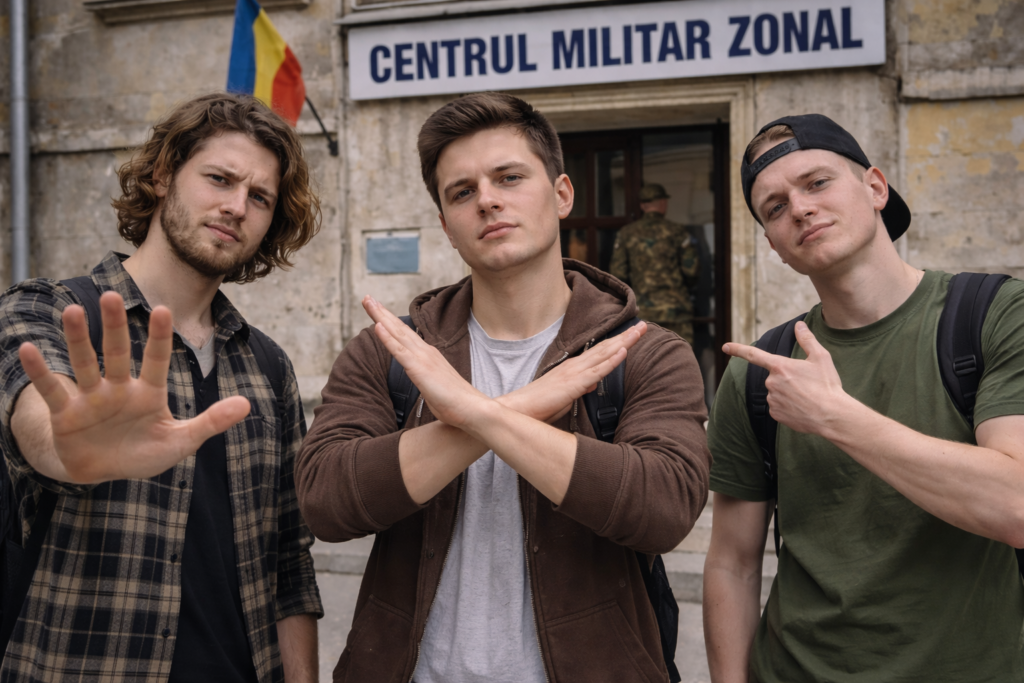
America preserved the essence of Kennedy’s message: a strong society is built on people who have passed through fire, not through excessive protection, not through permanent comfort, but through experiences that force you to become more than you were. For all its contradictions, America kept this core principle: first give, then receive. And that is precisely why, among the young people who consciously choose this difficult path, we may find not only debt-free graduates but future world leaders, people who understand freedom is not free, education is not a right without obligations, and a solid future is built, not requested.
Young people who consciously choose the military are not running from life. On the contrary, they confront it early, with all its risks, precisely so they do not become prisoners of a limited existence. They understand that freedom, education, and dignity are not free. Because in the end, a society is not defined by how much it offers unconditionally, but by how well it knows how to transform sacrifice into character.