
AMERICA – turns out, the biggest surprise in America isn’t the scale, it’s the everyday grace.
By Diana M.
I’ve visited America multiple times, and each time, it felt like I was stepping into a brand-new country. I landed eager to explore, ready for new discoveries, but I hadn’t expected my first cultural shock to come not from a towering skyscraper or the omnipresent fast-food chains. No, the first thing that truly caught me off guard was a simple “Hello,” said as effortlessly as we, back home, sigh about gas prices going up again.
The national greeting and other daily surprises
In some places, saying “Good morning” is a rare occurrence, doled out sparingly. But in the U.S., it feels almost like a civic duty. You hear it on the subway, in stores, on the street, from a neighbor seeing you for the first time, or even from a stranger passing by in the park. And it’s not just a sound thrown into the wind – it’s an unspoken social contract: I acknowledge your existence, and you acknowledge mine. Now we can go about our day in peace.
And then there’s the eternal question: “How are you?” – the one that terrifies Europeans who think they need to provide an honest, soul-searching response. Rest assured, no one expects a dramatic monologue about the meaning of life. A simple “Fine, thanks! And you?” is enough to build an invisible bridge between people. It’s as if Americans have set their social default to “Let’s be kind to each other,” and trust me, that changes everything. It’s just a polite way of saying “I see you”—whether your day is great or falling apart. A quick exchange of words that, surprisingly, makes the world feel like a friendlier place.
Disasters and everyday heroes
If you want to see solidarity in action, just watch what happens after a hurricane, a wildfire, or any other natural disaster. Here, people don’t just stand around, shaking their heads and saying, “What a tragedy.” They mobilize, donate, rebuild. It’s as if they have this ingrained belief that helping someone today might just earn them a free parking spot when they need it most.
By contrast, in many parts of the world, solidarity often unfolds more on social media than in real life. But here, it’s different. The unspoken rule is simple: “Need help? I’m here.” And it’s not just a slogan – it’s action.
DC: Where culture is free and forests move into the city
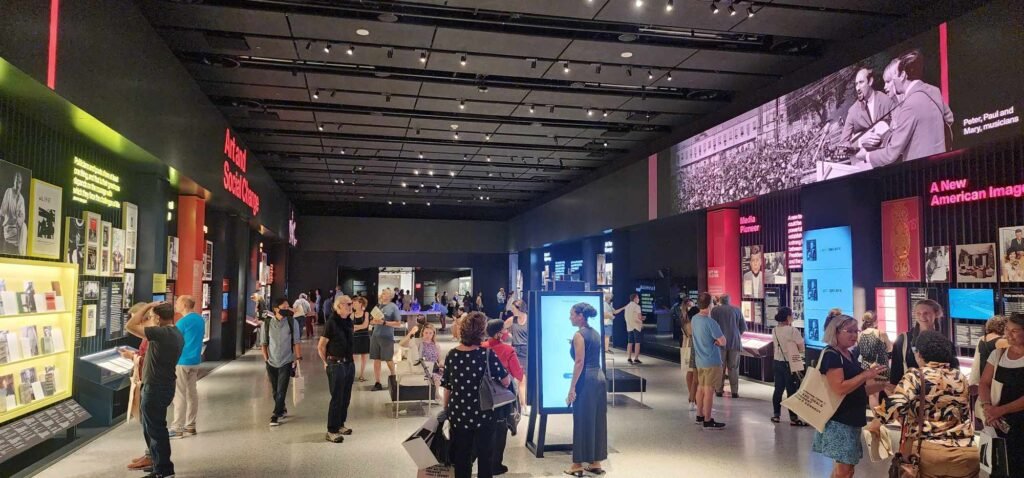
If there’s one place where “education for all” isn’t just an ideal but a reality, it’s Washington, D.C. All Smithsonian museums – from the Natural History Museum to the Air and Space Museum – are free. Yes, you read that right: free entry for anyone, local or tourist. Kids, students, retirees – they all pile into buses, visit, explore, learn.
And let’s not forget the city’s “smaller residents” – the National Zoo is also, you guessed it, free! Pandas, tigers, elephants -all living there without charging you an entrance fee.
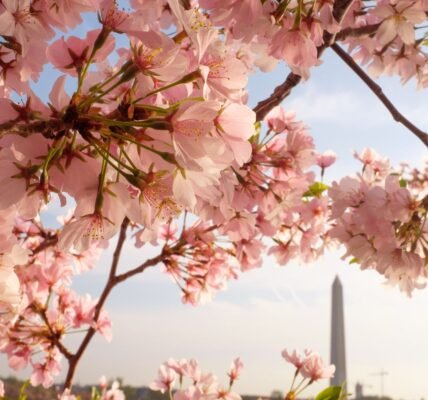
But it’s not just culture that gets a special place – nature does, too. D.C. isn’t just about grand buildings and glass-covered offices. Nestled between its streets and neighborhoods are countless parks—actually, let’s call them “mini-forests” – pockets of green that break up the city’s relentless pace. Americans understand their value: these are the lungs of a fast-moving capital, places where you can pause, escape the noise, and breathe.

The Potomac: where the city takes a break from itself
And speaking of places where the soul breathes- let’s talk about the Potomac River. This isn’t just any river; it’s where D.C. remembers that it’s more than politics and power suits. The riverbanks are beautifully maintained, boats glide lazily, people sit on benches or stretch out on the grass, and ducks and swans are fed more bread than any nutritionist would recommend.
Look closely, and you’ll see the National Cathedral reflecting in the water, like an Impressionist painting nature decided to retouch at will. Nearby, the Kennedy Center stands watch, an elegant presence – America’s very own Versailles of culture.
A fascinating cultural puzzle
The U.S. is a land of contrasts, but also a land of small details that stay with you. From the universal greeting to the impressive response to crises to the way parks carve their way through the urban jungle – each element reveals a different way of being. A way that, if you pay close attention, has a lot to teach.
So, if you find yourself in America, don’t forget to answer with a “Fine, thanks!” and enjoy the simple things. You’ll see just how much they matter.
Had someone told me that, in a country this vast and complex, I’d be most impressed by a simple “Hello,” by human kindness, or by the fact that museums that cost a fortune elsewhere are free here – I would have been skeptical.
And yet, here I am, realizing that sometimes, it’s the smallest details that make a place truly special. So, if you ever visit the U.S. – especially Washington, D.C. – don’t hesitate to return a smile when someone asks “How are you?”, feed a duck by the Potomac, and stop by the Kennedy Center. You’ll discover that America isn’t just a country of contrasts – it’s a country where little gestures, woven together, create something extraordinary.
P.S.: In Romania, getting a “hello!” in return feels like applying for a mortgage – complicated, full of conditions, and with a hefty emotional interest rate. Sometimes, it seems like people think greetings cost money, and they’re just not willing to risk it.